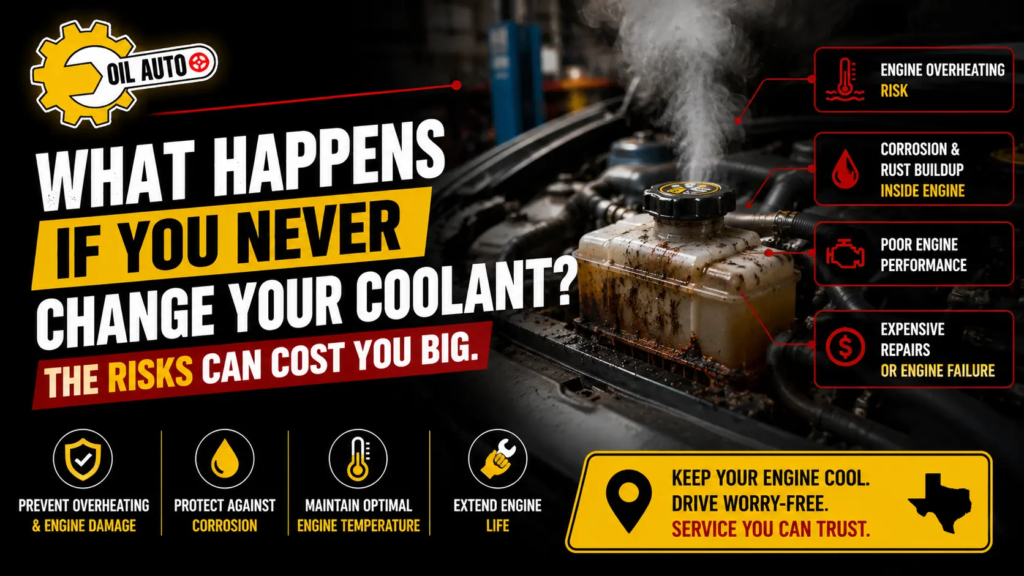
Most drivers know they need regular oil changes, tire rotations, and brake inspections, but coolant is often overlooked until something goes wrong. Because your engine coolant works quietly in the background, it’s easy to assume it’s doing its job indefinitely. Unfortunately, that’s not how modern cooling systems work.
Over time, coolant gradually breaks down, loses its protective properties, and becomes contaminated with rust, scale, and other debris. When this happens, your cooling system has to work harder to regulate engine temperature, increasing the risk of overheating, corrosion, and expensive engine damage.
If you’ve ever wondered what happens if you never change your coolant, the answer is simple: neglecting this essential maintenance can shorten the life of your engine and lead to repairs that cost far more than routine service.
Whether you drive through the busy streets of McKinney, commute daily in Euless, or spend hours on Texas highways during the summer, maintaining your cooling system is one of the best ways to keep your vehicle running reliably.
Drivers looking for reliable coolant service in Euless can also count on Oil Auto Plus for professional cooling system maintenance, including coolant inspections, fluid replacement, and preventive services designed to protect your engine from overheating and long-term damage.
At Oil Auto Plus, we help drivers protect their engines through preventive maintenance and professional cooling system inspections that identify problems before they become major repairs.
What Does Engine Coolant Actually Do?
Engine coolant often called antifreeze is much more than a liquid that prevents your engine from overheating.
Modern coolant performs several important functions at the same time. It transfers heat away from the engine, helps regulate operating temperature, protects internal components from corrosion, lubricates the water pump, and prevents freezing during colder weather.
As coolant circulates through the engine, radiator, water pump, hoses, and heater core, it continually absorbs and releases heat to maintain the proper operating temperature.
Without properly functioning coolant, your engine could quickly become too hot or too cold, both of which reduce performance and increase mechanical wear.
Routine Routine Maintenance helps ensure every part of your cooling system continues operating efficiently.
Does Coolant Wear Out?
Many drivers are surprised to learn that coolant has a service life.
Although it doesn’t disappear like engine oil, the additives inside coolant gradually break down over time. These additives are responsible for protecting metal components from corrosion, preventing mineral deposits, and maintaining proper lubrication throughout the cooling system.
As the coolant ages, it becomes less effective at performing these tasks.
Eventually, contaminated coolant may contain:
- Rust particles
- Mineral deposits
- Scale buildup
- Dirt and debris
- Chemical breakdown products
These contaminants circulate throughout the cooling system, reducing efficiency and increasing wear on important components.
That’s why manufacturers recommend periodic coolant replacement rather than waiting until a problem develops.
What Happens If You Never Change Your Coolant?
Ignoring coolant replacement doesn’t usually cause immediate failure, which is one reason many drivers postpone the service.
Instead, damage develops gradually.
Initially, the cooling system may continue functioning normally even as coolant loses its protective properties. Over time, however, corrosion begins forming inside the radiator, engine passages, heater core, and water pump.
As contamination increases, coolant becomes less effective at transferring heat.
Eventually, your engine may experience:
- Higher operating temperatures.
- Reduced cooling efficiency.
- Increased corrosion.
- Water pump wear.
- Restricted coolant flow.
- Higher risk of overheating.
Left untreated, these issues may lead to head gasket failure, radiator damage, or even complete engine failure.
Replacing coolant on schedule is significantly less expensive than repairing major cooling system damage.
Warning Signs Your Coolant May Need Attention
Your vehicle often provides warning signs before cooling system problems become severe.
Some common symptoms include:
- Rising engine temperature.
- Frequent overheating.
- Low coolant level.
- Rust-colored coolant.
- Sweet smell from the engine compartment.
- Coolant leaks beneath the vehicle.
- Poor cabin heater performance.
- Steam coming from under the hood.
These symptoms don’t always mean your coolant alone is responsible, but they should never be ignored.
A professional inspection can determine whether the issue involves coolant condition, leaks, thermostat operation, radiator performance, or another cooling system component.
Our experienced technicians use advanced Engine Diagnostic equipment to identify cooling system problems accurately before recommending repairs.
Ready for service you can count on?
Our certified technicians are ready to help with everything from fast oil changes to complete auto repair.
Coolant Maintenance vs. Waiting for Repairs
Many vehicle owners wonder whether preventive maintenance is truly worthwhile.
Here’s a simple comparison.
| Routine Coolant Service | Waiting Until Failure |
| Maintains proper engine temperature | Increased risk of overheating |
| Protects against corrosion | Internal rust and scale buildup |
| Extends cooling system life | Higher likelihood of expensive repairs |
| Helps preserve water pump performance | Greater wear on cooling system components |
| Supports reliable engine operation | Potential engine damage or breakdown |
Routine maintenance almost always costs less than repairing damage caused by neglected coolant.
Why Texas Heat Makes Coolant Maintenance Even More Important
Texas drivers place significant demands on their vehicles throughout the year.
High summer temperatures, stop-and-go traffic, extended highway driving, towing, and heavy air conditioner use all increase engine operating temperatures.
Your cooling system works hardest precisely when outside temperatures are highest.
Old coolant that’s already losing effectiveness may struggle to keep the engine within its proper operating range during these conditions.
That’s why scheduling a coolant flush in McKinney, TX or coolant flush in Euless, TX according to your vehicle manufacturer’s recommendations is especially important for drivers throughout North Texas.
Regular inspections help ensure your cooling system remains ready for demanding driving conditions before overheating becomes a problem.
Is a Coolant Flush the Same as Simply Adding More Coolant?
This is one of the most common misunderstandings among vehicle owners.
Adding coolant only replaces the amount that’s missing. It does not remove contaminated coolant already circulating throughout the system.
A professional coolant flush removes much of the old coolant along with accumulated rust, scale, and debris before replacing it with fresh coolant formulated for your specific vehicle.
This process restores the protective additives your cooling system depends on and helps improve overall cooling efficiency.
Simply topping off the coolant reservoir cannot restore worn-out corrosion inhibitors or remove contaminants that have built up over time.
If your vehicle hasn’t had cooling system service in several years, your technician may recommend a complete flush rather than simply adding more coolant.
Coolant Flush vs. Radiator Flush: Is There a Difference?
Many drivers use the terms “coolant flush” and “radiator flush” interchangeably, but they aren’t always exactly the same.
A radiator flush primarily focuses on cleaning the radiator by removing old coolant and contaminants that have accumulated inside it. A complete coolant flush, however, circulates cleaning solution and fresh coolant throughout the entire cooling system, including the engine block, radiator, heater core, hoses, and other connected components.
While both services improve cooling system performance, a complete coolant flush generally provides more comprehensive protection because it removes contaminants from the entire system rather than concentrating on the radiator alone.
If you’re scheduling a radiator flush McKinney TX or radiator flush Euless TX, ask your service advisor whether your vehicle would benefit from a complete cooling system flush based on the manufacturer’s recommendations and the condition of your vehicle.
How Often Should Engine Coolant Be Replaced?
There isn’t a single maintenance interval that applies to every vehicle. Modern coolants are formulated differently, and manufacturers specify replacement schedules based on engine design and coolant type.
Some vehicles may require coolant replacement every 30,000 miles, while others using long-life coolant may go significantly longer before service is recommended.
Instead of relying on mileage alone, consider factors such as:
- Vehicle age.
- Driving habits.
- Climate conditions.
- Towing or heavy-duty use.
- Manufacturer maintenance schedule.
Texas drivers often place greater demands on their cooling systems because of prolonged heat, frequent stop-and-go traffic, and extended highway driving. These conditions make routine cooling system inspections even more valuable.
During regular maintenance appointments, your technician can inspect coolant condition and recommend service before performance begins to decline.
Why Cooling System Inspections Matter
Your cooling system is made up of several components that work together to keep your engine operating at the correct temperature.
Even if the coolant itself is in good condition, worn hoses, leaking fittings, a weak radiator cap, or a failing thermostat can reduce system performance.
A professional cooling system service McKinney or cooling system service Euless typically includes inspection of:
- Radiator
- Coolant hoses
- Hose clamps
- Water pump
- Thermostat
- Radiator cap
- Coolant reservoir
- Cooling fan operation
- Visible leaks
Finding these issues early helps reduce the risk of unexpected breakdowns while extending the life of your engine.
Routine inspections become even more valuable before long road trips or during the hottest months of the Texas summer.
Can Old Coolant Damage Your Engine?
Yes. While the damage usually develops gradually, neglected coolant can eventually affect some of the most expensive components in your vehicle.
As corrosion spreads through the cooling system, rust and debris restrict coolant flow and reduce heat transfer. This forces the engine to operate at higher temperatures, placing additional stress on internal components.
If overheating becomes severe, it may lead to:
- Warped cylinder heads.
- Blown head gaskets.
- Water pump failure.
- Radiator damage.
- Heater core failure.
- Cracked engine components in extreme cases.
These repairs are significantly more expensive than routine coolant maintenance, which is why preventive service is one of the smartest investments you can make in your vehicle.
In situations where prolonged overheating has already caused serious internal damage, more extensive repairs such as Engine Replacement may become necessary. Preventive maintenance greatly reduces the likelihood of reaching that point.
Combine Coolant Service with Routine Vehicle Maintenance
Cooling system maintenance works best when it’s included as part of your vehicle’s overall preventive maintenance schedule.
Many drivers choose to combine coolant replacement with services such as an Oil Change, tire rotation, or seasonal vehicle inspection. This approach allows technicians to evaluate multiple systems during one visit while helping you stay on top of recommended maintenance intervals.
If your vehicle is already being inspected, it’s an ideal time to check coolant condition, inspect hoses and belts, and verify that the cooling system is operating efficiently.
Preventive maintenance not only helps reduce unexpected repairs but also contributes to better engine performance, improved reliability, and greater peace of mind on the road.
Choosing a Trusted Auto Repair Shop in McKinney or Euless
If you’ve been searching for auto repair McKinney TX or auto repair Euless TX, it’s important to choose a shop that looks beyond the immediate symptom and evaluates the entire cooling system.
A qualified technician should inspect coolant condition, pressure-test the system if needed, examine hoses and connections, and identify the underlying cause of any overheating concerns before recommending repairs.
At Oil Auto Plus, we believe preventive maintenance is one of the most effective ways to help drivers avoid costly breakdowns. Our experienced technicians use quality parts, professional equipment, and manufacturer-recommended procedures to help keep your vehicle running reliably throughout the year.
Whether you need a coolant flush, cooling system inspection, or other maintenance services, our goal is to provide honest recommendations and dependable workmanship.
You can learn more about our commitment to customer service on our About Us page or find the nearest location through our Locations page.
Protect Your Engine Before Problems Begin
Understanding what happens if you never change your coolant highlights just how important this often-overlooked maintenance service really is. While coolant may seem like a simple fluid, it plays a critical role in regulating engine temperature, preventing corrosion, lubricating cooling system components, and protecting your vehicle from expensive mechanical damage.
By replacing coolant at the recommended intervals and scheduling routine inspections, you can reduce the risk of overheating, extend the life of your engine, and avoid many of the costly repairs associated with neglected cooling systems.
If it’s been several years since your last coolant service or you’re unsure when it was last performed. the experienced team at Oil Auto Plus is ready to help. We provide professional cooling system inspections, coolant replacement, and preventive maintenance for drivers throughout McKinney, Euless, and the surrounding Texas communities.
Don’t wait for an overheating warning light or roadside breakdown to remind you about coolant maintenance. Contact us today to schedule your cooling system inspection and keep your vehicle performing at its best.
FAQs
1. What happens if you never change your coolant?
Old coolant gradually loses its ability to protect your engine from heat and corrosion. Over time, contaminants can build up inside the cooling system, increasing the risk of overheating, water pump wear, radiator damage, and even major engine failure.
2. How often should engine coolant be replaced?
The recommended interval varies by vehicle manufacturer and coolant type. Some vehicles require replacement around every 30,000 miles, while others use long-life coolant with longer service intervals. Your owner’s manual or a trusted technician can provide the correct recommendation.
3. Is a coolant flush the same as adding more coolant?
No. Topping off coolant only replaces the fluid that’s missing. A coolant flush removes contaminated coolant, cleans the cooling system, and refills it with fresh coolant that contains the protective additives your engine needs.
4. What’s the difference between a coolant flush and a radiator flush?
A radiator flush primarily cleans the radiator, while a complete coolant flush circulates fresh coolant through the entire cooling system, including the engine block, heater core, hoses, and radiator. A complete flush generally provides more comprehensive protection.
5. Can old coolant cause engine overheating?
Yes. As coolant ages, it becomes less effective at transferring heat and protecting against corrosion. This can reduce cooling efficiency, allowing engine temperatures to rise and increasing the risk of overheating.
6. What are the warning signs that my cooling system needs service?
Common signs include rising engine temperature, coolant leaks, rust-colored coolant, a sweet smell under the hood, poor heater performance, steam from the engine compartment, or frequent overheating. These symptoms should be inspected promptly.
7. Should I replace coolant even if my car isn’t overheating?
Yes. Preventive coolant replacement helps protect your cooling system before problems develop. Waiting until the engine overheats may allow corrosion and wear to damage expensive components.
8. Why choose Oil Auto Plus for cooling system service?
At Oil Auto Plus, we provide professional cooling system inspections, coolant replacement, engine diagnostics, and preventive maintenance using quality equipment and experienced technicians. Learn more about our complete automotive services or explore additional maintenance tips on our blog.
Ready for service you can count on?
Our certified technicians are ready to help with everything from fast oil changes to complete auto repair.