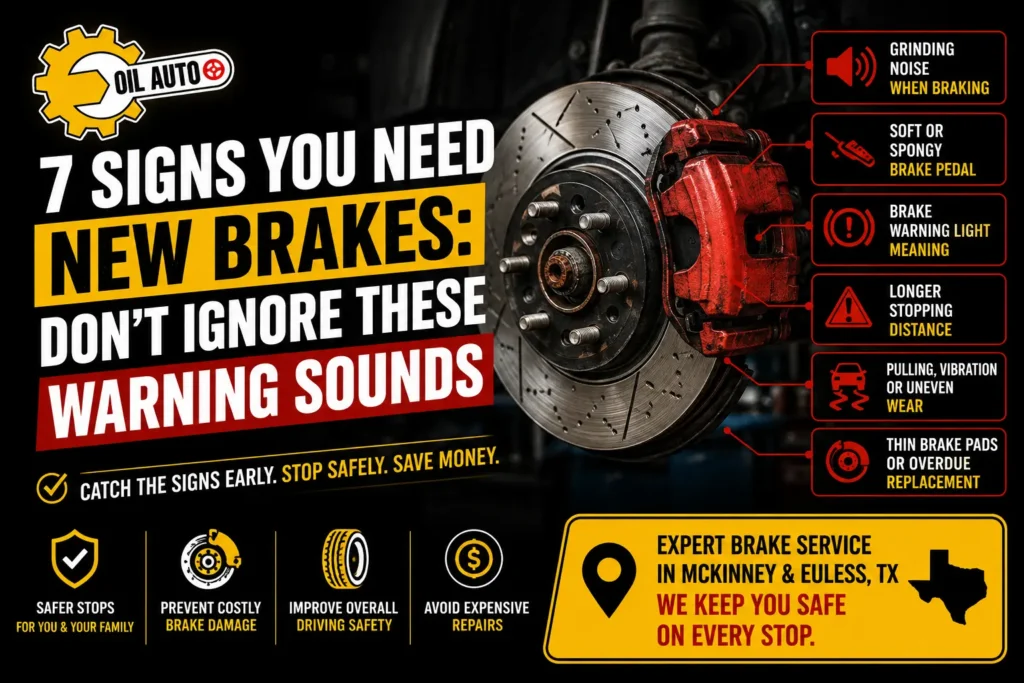
Your vehicle’s brakes are responsible for one of the most important things your car does: helping you stop safely. Whether you are driving through busy McKinney streets, commuting around Euless, or traveling on North Texas highways, your braking system needs to respond quickly and consistently whenever you press the pedal.
Brake components naturally wear over time. The challenge is that brake problems do not always begin with an obvious failure. A squeak, vibration, change in pedal feel, or warning light may be the first indication that something needs attention.
Knowing the signs you need new brakes can help you recognize problems early and prevent unnecessary damage to other braking components.
If you notice any unusual braking behavior, Oil Auto Plus brake service can help determine whether your vehicle needs new brake pads, rotor service, or another type of brake repair.
1. You Hear a Grinding Noise When Braking
A grinding noise when braking is one of the warning signs you should take seriously.
Brake pads contain friction material that gradually wears down as you drive. Many brake pads are designed with wear indicators that produce a noticeable noise when the pads become thin. If the pads continue to wear beyond that point, the metal backing of the brake pad can come into contact with the rotor.
That metal-on-metal contact can produce a harsh grinding sound.
Continuing to drive with grinding brakes can damage the brake rotors and potentially other components. What could have been a brake pad replacement may become a more extensive repair if the problem is ignored.
If you hear grinding every time you brake, avoid putting off an inspection. A technician can examine the brake pads, rotors, calipers, and related components to determine the source of the noise.
2. Your Brake Pedal Feels Soft or Spongy
A brake pedal should feel relatively consistent whenever you apply it. If the pedal suddenly feels soft, spongy, or unusually easy to push, your braking system should be inspected.
There are several possible soft brake pedal causes. Air or moisture in the brake fluid, a hydraulic system problem, a brake fluid leak, or a problem with another braking component can all affect pedal feel.
A soft pedal does not automatically mean that your brake pads need replacement. The braking system is made up of multiple components, and the underlying cause needs to be identified before the correct repair can be recommended.
If you notice a significant change in pedal feel, do not compensate by simply pressing harder. Have the vehicle inspected and consider reviewing the complete range of automotive services offered by Oil Auto Plus to determine what type of inspection may be appropriate.
3. Your Vehicle Takes Longer to Stop
One of the most important signs you need new brakes is a noticeable change in stopping performance.
If your vehicle used to stop confidently but now seems to require more distance, something may be affecting the braking system. Worn brake pads, damaged rotors, brake fluid issues, or other mechanical problems can contribute to reduced braking performance.
This problem can be difficult to recognize because brake performance may decline gradually. You might adjust your driving without realizing that your vehicle is taking longer to stop.
Pay particular attention when driving in heavy traffic. If you need to press the pedal farther or earlier than you normally would to stop safely, schedule a brake inspection.
Do not wait until your brakes fail completely. Addressing a developing problem early can help protect other components and maintain reliable stopping performance.
4. Your Brake Warning Light Comes On
Dashboard warning lights should never be ignored, especially when they relate to the braking system.
The brake warning light meaning can vary depending on the vehicle. In some situations, the warning light may simply indicate that the parking brake is engaged. In other cases, it may indicate low brake fluid or a problem within the braking system.
Modern vehicles may also have electronic systems that monitor different brake-related functions.
If the brake warning light remains illuminated after you confirm that the parking brake is released, check your vehicle owner’s manual and arrange for an inspection.
If the warning light appears at the same time as a soft pedal, grinding noise, fluid leak, or reduced stopping ability, the situation deserves immediate attention.
You can learn more about Oil Auto Plus and the services available for maintaining your vehicle’s braking and other critical systems.
Ready for service you can count on?
Our certified technicians are ready to help with everything from fast oil changes to complete auto repair.
5. Your Vehicle Pulls to One Side While Braking
Does your car pull noticeably to the left or right when you apply the brakes?
Uneven braking can sometimes be caused by worn brake pads, a sticking brake caliper, or another brake-system problem. However, pulling can also result from tire pressure issues, wheel alignment problems, suspension components, or other mechanical conditions.
That is why it is important not to assume that the brake pads are automatically responsible.
A professional inspection can help determine whether the problem is related to the braking system or another area of the vehicle.
If your vehicle consistently pulls while braking, schedule an inspection rather than trying to correct the movement by steering against it. If you need to arrange an appointment, you can contact Oil Auto Plus to discuss your vehicle’s symptoms.
6. You Feel Vibrations When Braking
Another common warning sign is vibration or pulsation when you apply the brakes.
You may feel the vibration through the steering wheel, brake pedal, or the vehicle itself. One possible cause is an uneven brake rotor surface. Brake rotors can develop wear or other surface problems that affect how evenly the brake pads make contact.
Heat and repeated braking can contribute to brake component wear, particularly under demanding driving conditions.
However, vibration does not automatically mean that the rotors need to be replaced. The correct repair depends on the condition of the rotors, pads, calipers, and other components.
A brake inspection can determine whether the problem requires brake pad replacement, rotor service, or another repair.
If you are experiencing brake vibration, schedule brake service before the condition becomes more severe.
7. Your Brake Pads Are Thin or Overdue for Replacement
One of the most direct answers to when to replace brake pads is when the remaining friction material reaches the manufacturer’s minimum recommended thickness.
Brake pads do not have a universal replacement mileage. Their lifespan depends on driving habits, traffic conditions, vehicle type, road conditions, and the materials used in the braking system.
For example, frequent stop-and-go driving can place more demand on the brakes than long-distance highway driving. Repeated hard braking can also accelerate brake-pad wear.
During a brake inspection, a technician can measure the remaining brake pad material and examine the condition of the rotors and other components.
If your brake pads are approaching the end of their usable life, replacing them before they become severely worn can help prevent additional damage.
It is also worth checking current Oil Auto Plus service specials when planning maintenance or brake work.
What Happens If You Ignore Worn Brakes?
Ignoring brake problems does not make them go away. In many cases, a small brake issue can develop into a more expensive repair.
For example, brake pads that are worn beyond their usable friction material can allow metal components to contact the rotor. This can damage the rotor and increase the amount of work required to restore the braking system.
Potential consequences of ignoring brake problems include:
- Longer stopping distances
- Reduced braking performance
- Damaged brake rotors
- Uneven component wear
- Increased repair costs
- Greater safety risks
If you notice a new noise, vibration, warning light, or change in pedal feel, getting the problem diagnosed early is generally a better approach than waiting for a complete brake failure.
How Often Should You Have Your Brakes Inspected?
There is no single brake inspection interval that applies to every vehicle. Your vehicle manufacturer’s maintenance recommendations, driving habits, mileage, road conditions, and brake component condition should all be considered.
You should also have your brakes inspected when you notice a change in performance.
Pay attention to symptoms such as:
- Squealing or grinding noises
- A soft or spongy brake pedal
- Longer stopping distances
- Brake warning lights
- Pulling while braking
- Steering-wheel or pedal vibration
- Thin or visibly worn brake pads
Routine inspections can identify wear before it develops into a more significant problem.
If you are unsure whether your vehicle needs brake service, a professional inspection can provide a clearer answer based on the actual condition of your braking components.
Don’t Ignore the Signs Your Brakes Need Attention
Recognizing the signs you need new brakes can help you address brake wear before it compromises braking performance or causes unnecessary damage.
Grinding noises, a soft brake pedal, longer stopping distances, warning lights, pulling, vibrations, and worn brake pads are all reasons to have your vehicle checked.
If you are searching for free brake inspection McKinney TX or brake repair near me Euless TX, start by having the braking system properly evaluated rather than guessing which component needs replacement.
Oil Auto Plus provides brake and automotive services designed to help drivers identify problems and keep their vehicles operating safely. You can learn more about the company on the About Oil Auto Plus page or explore the latest automotive articles for additional maintenance information.
When your brakes start making unusual sounds or behaving differently, do not wait for the problem to become an emergency. An inspection can help determine what is wrong and what needs to be done to restore dependable braking performance.
Ready for service you can count on?
Our certified technicians are ready to help with everything from fast oil changes to complete auto repair.
FAQs
How do I know if I need new brakes?
Common signs include grinding or squealing noises, longer stopping distances, brake pedal vibrations, a soft pedal, pulling while braking, and visibly thin brake pads. A professional inspection can determine whether you need new brake pads, rotor service, or another brake repair.
When should brake pads be replaced?
Brake pads should generally be replaced when their remaining friction material reaches the minimum thickness recommended by the manufacturer or when an inspection identifies excessive wear. Brake-pad lifespan varies based on driving habits, traffic, vehicle type, and road conditions.
Is a grinding noise when braking serious?
Yes. A grinding noise can indicate that the brake pads have worn down significantly and metal components are contacting the rotor. Continuing to drive this way can cause additional damage. Have the braking system inspected promptly when persistent grinding occurs.
What are the common soft brake pedal causes?
A soft or spongy brake pedal can result from air or moisture in the brake fluid, a hydraulic-system problem, a brake fluid leak, or another braking-system issue. Because pedal feel can affect braking performance, the cause should be diagnosed rather than ignored.
What does the brake warning light mean?
The exact brake warning light meaning depends on the vehicle. It may indicate an engaged parking brake, low brake fluid, or a detected braking-system problem. If the light stays on after checking the parking brake, consult the owner’s manual and have the vehicle inspected.
Can worn brake pads damage other brake components?
Yes. If brake pads become excessively worn, the backing material can contact the rotor and cause significant damage. Replacing worn pads before they reach this stage can help prevent additional component wear and potentially reduce repair costs.
Can brakes cause a car to pull to one side?
Brake problems such as uneven pad wear or a sticking caliper can cause pulling during braking. However, tire pressure, alignment, suspension, and other issues can produce similar symptoms. A professional inspection is needed to identify the actual cause.
Where can I get brake service near McKinney or Euless?
Oil Auto Plus provides automotive and brake services for drivers in the area. If you notice grinding, vibration, a soft pedal, reduced stopping performance, or another brake warning sign, contact the shop to discuss an appropriate inspection and repair.