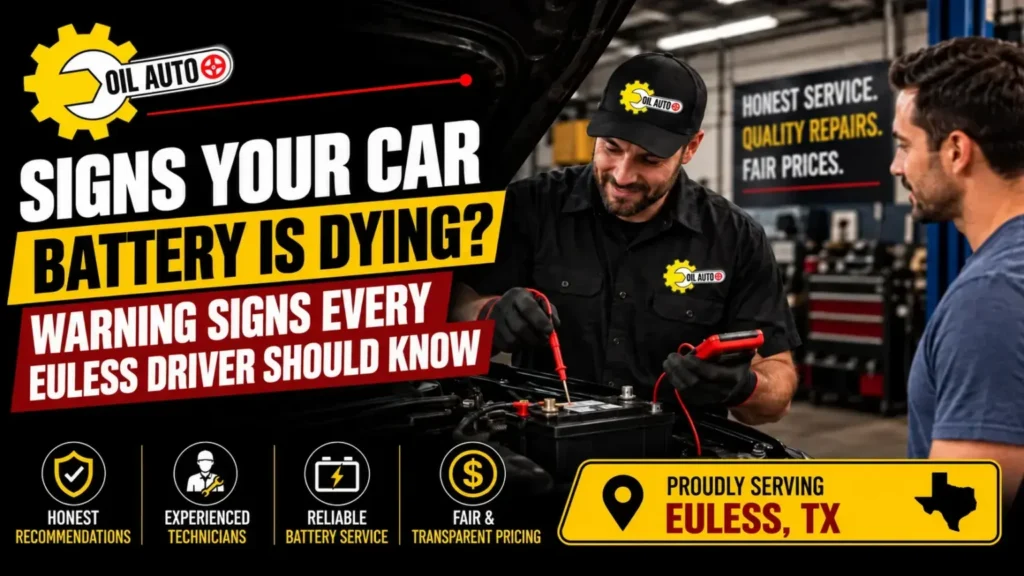
Your car battery plays a critical role every time you start your vehicle. It provides the electrical power needed to crank the engine, operate essential electronics, and support your vehicle’s electrical systems. When the battery begins to weaken, your car may give you several warnings before it completely fails.
Knowing the signs your car battery is dying can help you avoid being stranded in a parking lot, driveway, or on the side of the road. For drivers in Euless, TX, paying attention to these warning signs is especially important because frequent short trips, extreme temperatures, and everyday driving conditions can place additional demands on your battery.
At Oil Auto Plus, professional automotive services can help identify battery problems before they turn into unexpected starting issues. Here are the most common symptoms Euless drivers should know.
1. Your Engine Takes Longer to Start
One of the first signs your car battery is dying is a slow or hesitant engine start.
When you turn the key or press the start button, a healthy battery should provide enough power to crank the engine quickly. If the engine takes longer than usual to turn over, makes a sluggish cranking sound, or seems to struggle before starting, your battery may not be producing enough power.
A slow start does not always mean the battery is the only problem. Issues with the starter, alternator, or electrical system can create similar symptoms. That is why a professional inspection is useful when starting performance suddenly changes.
You can review the available automotive solutions through the Oil Auto Plus services page to find the right service for your vehicle.
2. Your Car Makes a Clicking Sound but Won’t Start
A rapid clicking noise when you attempt to start the vehicle is another common car won’t start battery symptom.
The clicking often occurs because the starter is trying to engage, but the battery does not have enough electrical power to complete the process. If the headlights and dashboard lights also appear weak, a low or failing battery becomes even more likely.
However, clicking can also be caused by loose battery connections, corroded terminals, or other electrical problems. Avoid repeatedly attempting to start the vehicle, as doing so may further drain a weak battery.
3. Your Headlights Are Dim
Your headlights can provide an early warning that your battery or charging system is struggling.
If headlights appear noticeably dim while the engine is off or during startup, your battery may not have enough reserve power. Flickering or unusually weak interior lights can also indicate an electrical issue.
Keep in mind that the alternator is responsible for charging the battery while the engine runs. Therefore, dim lights can sometimes point to an alternator or charging-system problem rather than the battery alone.
A proper electrical inspection can determine what is actually causing the issue instead of replacing parts unnecessarily.
Ready for service you can count on?
Our certified technicians are ready to help with everything from fast oil changes to complete auto repair.
4. Electrical Accessories Work Slowly
Your vehicle’s battery supports many electrical systems, especially when the engine is not running. If power windows, interior lights, dashboard electronics, or other accessories appear slower than normal, it may be a warning that the battery is losing strength.
For example, you might notice that your power windows move more slowly than they usually do, or that the interior lights become weak when the vehicle is turned off.
These symptoms should not automatically be blamed on the battery, but when several electrical problems appear at the same time, an inspection is recommended.
5. Battery Warning Light Appears
Your dashboard battery warning light is another important signal.
Although many drivers assume this light means the battery itself has failed, it can actually indicate a problem somewhere in the charging system. The alternator, battery connections, wiring, voltage regulator, or battery may be involved.
If the battery warning light comes on while you’re driving, have the vehicle checked as soon as practical. Continuing to drive with a charging-system problem could eventually leave the vehicle unable to restart.
For regular maintenance and vehicle inspections, you can explore the full range of services available from Oil Auto Plus.
6. There Is Corrosion Around the Battery Terminals
Open the hood and inspect the battery terminals occasionally. White, blue, or greenish buildup around the terminals can indicate corrosion.
Corrosion can interfere with the electrical connection between the battery and the vehicle. In some situations, even a battery with adequate charge may have trouble delivering power because of a poor connection.
Terminal corrosion can be caused by battery leakage, normal chemical reactions, or environmental conditions. Cleaning the terminals and checking the connections may resolve some starting issues, but a professional inspection can identify whether the battery itself also needs replacement.
7. Your Battery Is Getting Older
One of the most important questions drivers ask is, how long do car batteries last?
The answer varies depending on the battery type, vehicle, climate, driving habits, maintenance, and electrical demands. Many conventional automotive batteries commonly last several years, but there is no exact replacement date that applies to every vehicle.
Heat is particularly hard on batteries, and vehicles that experience frequent short trips may also put additional stress on the battery and charging system.
If you are unsure about the age or condition of your battery, having it tested can help determine whether it still has enough capacity to reliably start your vehicle.
8. Your Battery Case Looks Swollen or Damaged
A swollen battery case is a serious warning sign.
Physical swelling can occur when the battery has been exposed to excessive heat, overcharging, or internal damage. A visibly damaged or deformed battery should not be ignored.
If you notice swelling, cracks, leaks, or other physical damage, avoid handling the battery unnecessarily and have it professionally inspected. Continuing to use a damaged battery can create additional safety and reliability concerns.
How to Test a Car Battery
If you are wondering how to test a car battery, a battery tester or digital multimeter can provide useful information about its voltage and condition.
A basic voltage check can indicate the battery’s state of charge, but voltage alone does not always tell the whole story. A battery may show an acceptable voltage reading and still fail under the load required to start the engine.
A proper battery test can evaluate how well the battery performs under starting conditions. A technician may also check the alternator and charging system to determine whether the battery is actually receiving the correct charge.
This distinction is important because replacing a battery will not solve the problem if a faulty alternator is the underlying cause.
When Should You Consider Battery Replacement?
Several symptoms together can indicate that replacement is approaching. Common signs you need a new battery include repeated slow starts, frequent jump-starts, dimming electrical components, an aging battery, and failed battery tests.
If your battery is several years old and you’re already noticing starting problems, it may be more practical to replace it before it fails completely.
Drivers looking for car battery replacement in Euless, TX can visit Oil Auto Plus Battery Service to learn more about battery-related service and inspection.
How Euless Drivers Can Avoid Unexpected Battery Failure
A few simple habits can reduce the chance of being surprised by a dead battery.
Check your battery condition during routine maintenance, especially as the battery gets older. Keep terminals clean and make sure the connections remain secure. Avoid leaving headlights, interior lights, or accessories running when the engine is off.
It is also helpful to pay attention to changes in starting performance. A vehicle rarely goes from a perfectly healthy battery to a completely failed battery without any warning. Small symptoms can appear days, weeks, or months before a complete failure.
Regular vehicle maintenance can make these problems easier to identify. You can also check Oil Auto Plus Specials for current service offers.
Don’t Wait Until Your Car Won’t Start
A weak battery can quickly become a major inconvenience. Recognizing the signs your car battery is dying gives you an opportunity to address the issue before you’re stranded.
If your car is showing slow-starting symptoms, clicking when you try to start it, dim lights, electrical issues, or other battery-related warning signs, schedule an inspection before the problem gets worse.
For more information about available locations, visit the Oil Auto Plus locations page. You can also learn more about the company through the About page or get in touch directly through the contact page.
For additional vehicle maintenance tips and automotive advice, visit the Oil Auto Plus blog.
Ready for service you can count on?
Our certified technicians are ready to help with everything from fast oil changes to complete auto repair.
FAQs
How do I know if my car battery is dying?
Common warning signs include slow engine cranking, clicking when starting, dim headlights, weak electrical accessories, and frequent jump-starts. An older battery or visible corrosion around the terminals can also indicate that the battery may be nearing the end of its service life. A professional battery test can confirm its condition.
How long do car batteries last?
Many car batteries last several years, but their lifespan depends on climate, driving habits, vehicle type, battery quality, and maintenance. Extreme heat, frequent short trips, and heavy electrical use can contribute to faster battery deterioration. Regular testing can help determine when replacement may be necessary.
Can a bad battery cause my car not to start?
Yes. A battery that does not have enough charge or starting capacity may not provide sufficient power to operate the starter motor. This can result in slow cranking, clicking sounds, or no start at all. However, starter and alternator problems can cause similar symptoms, so testing is important.
How can I test my car battery at home?
You can use a digital multimeter to check battery voltage, but a voltage reading alone cannot always determine whether a battery can reliably start the vehicle. A professional load or conductance test provides more useful information about battery performance and remaining capacity.
When should I replace my car battery?
Consider battery replacement when it repeatedly struggles to start the engine, fails a battery test, needs frequent jump-starts, or shows signs of physical damage. Battery age is also an important factor. Replacing a weak battery before complete failure can help prevent unexpected breakdowns.
Where can I get car battery replacement in Euless, TX?
Euless drivers can visit Oil Auto Plus for battery-related inspection and service. The Battery Service page provides more information about battery services and helps you determine the next step when your vehicle shows warning signs.