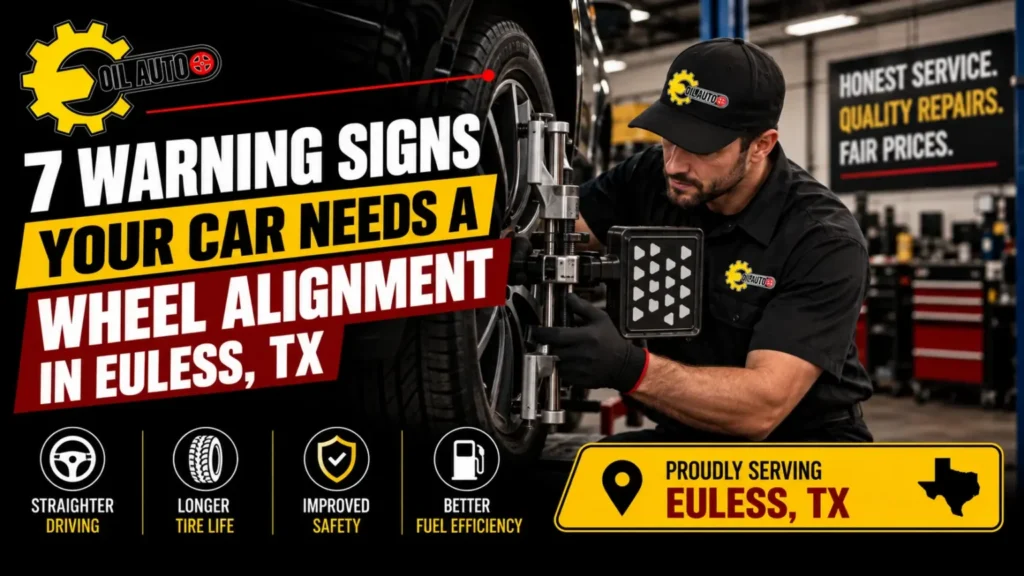
Your vehicle’s wheels need to point in the correct direction and maintain the proper angles so your tires can contact the road evenly. When those angles become misaligned, your car may begin to handle differently, tires can wear prematurely, and driving may become less comfortable.
Knowing the signs you need a wheel alignment can help you address the issue before it leads to unnecessary tire wear or other suspension-related problems. For drivers in Euless, TX, paying attention to changes in steering and handling is especially important when dealing with potholes, rough roads, curbs, and everyday stop-and-go driving.
At Oil Auto Plus, wheel alignment is one of the services available to help drivers maintain proper vehicle handling and tire performance. Here are seven common warning signs that your vehicle may need an alignment.
1. Your Car Is Pulling to One Side
One of the most noticeable signs of a potential alignment problem is a car pulling to one side.
When driving on a reasonably level road, your vehicle should generally maintain a straight path without requiring constant steering correction. If the car consistently drifts or pulls left or right, incorrect wheel alignment may be one possible cause.
A vehicle pulling to one side can also result from uneven tire pressure, tire-related problems, worn suspension components, or road conditions. This means an alignment should not automatically be assumed to be the cause.
However, if your tire pressures are correct and the vehicle continues to pull, having the steering and suspension system inspected is a sensible next step.
You can explore other vehicle services through the Oil Auto Plus services page if you notice additional handling or maintenance concerns.
2. Your Steering Wheel Is Off Center
Another common warning sign is a steering wheel off center while the vehicle is traveling straight.
For example, you may notice that the steering wheel sits slightly to the left or right even though the vehicle itself appears to be traveling straight ahead. In some cases, the difference can be subtle. In others, the steering wheel may be noticeably crooked.
An off-center steering wheel can indicate that the wheel alignment angles are not properly adjusted. It can also develop after suspension or steering work.
Because steering-wheel position is connected to how the vehicle tracks down the road, it is worth having the vehicle checked when the steering wheel suddenly changes position.
3. Your Tires Are Wearing Unevenly
Uneven tire wear alignment problems are another important warning sign.
A properly aligned vehicle should allow the tires to maintain appropriate contact with the road. When alignment angles are incorrect, certain portions of the tread may experience more pressure and friction than others.
During an inspection, look for wear concentrated on the inner or outer edges of the tire. Feathered or irregular tread wear can also suggest an alignment or suspension issue.
Uneven tire wear should not be ignored. Tires that wear prematurely may require replacement sooner than expected, increasing your overall vehicle operating costs.
Regular inspections can help identify tire and suspension concerns before the wear becomes severe.
4. Your Vehicle Feels Unstable or Difficult to Keep Straight
Does your vehicle seem to require constant steering adjustments? Do you feel like the car does not track as smoothly as it used to?
These changes can indicate an alignment issue.
A vehicle with incorrect wheel angles may feel less stable or predictable, especially when driving at higher speeds. You may find yourself making frequent minor steering corrections just to maintain a straight path.
This doesn’t necessarily mean the alignment is the only problem. Tire condition, suspension components, steering parts, and tire pressure can all affect handling.
A professional inspection can help determine whether alignment correction is necessary or whether another issue is contributing to the change.
5. Your Steering Feels Different After Hitting a Pothole or Curb
A strong impact can change your vehicle’s wheel alignment.
Hitting a deep pothole, striking a curb, or driving over a rough road surface can place significant force on wheels, tires, steering components, and suspension parts.
One of the answers to what causes bad alignment is impact damage or sudden road impacts. Even when there is no obvious visible damage, the alignment angles can change enough to affect how the vehicle drives.
After a significant impact, pay attention to new symptoms such as:
- A vehicle pulling left or right
- An off-center steering wheel
- New vibration or handling changes
- Uneven tire wear
- Difficulty maintaining a straight path
If you notice these symptoms after an impact, an alignment inspection can help determine whether your vehicle’s wheel angles remain within the appropriate specifications.
6. Your Tires Are Wearing Out Faster Than Expected
Premature tire wear is another reason to investigate your alignment.
Tires are a major vehicle expense, and replacing them earlier than necessary can become costly. If one pair of tires consistently wears much faster than the others, an alignment or suspension issue may be contributing to the problem.
This is particularly important when new tires have recently been installed. New tires can still experience accelerated or uneven wear if the underlying alignment issue has not been corrected.
Proper tire inflation, regular rotation when recommended, and routine inspections can all contribute to longer tire life. When unusual tread wear continues despite proper tire care, an alignment check may be appropriate.
For drivers planning upcoming automotive work, you can also review available Oil Auto Plus specials before scheduling service.
7. Your Vehicle No Longer Handles the Way It Used To
Sometimes the warning sign is simply that your vehicle feels different.
You may notice that steering requires more correction, cornering feels less predictable, or the vehicle doesn’t return to a straight path as smoothly as before. These changes can develop gradually, making them easy to overlook.
Because drivers become accustomed to their vehicles, even small handling changes may seem normal over time. Paying attention to how your vehicle normally steers can make it easier to identify developing problems.
When several symptoms appear together, such as an off-center steering wheel, uneven tire wear, and a vehicle pulling to one side, an alignment inspection becomes particularly worthwhile.
What Causes Bad Alignment?
Drivers often ask, what causes bad alignment? Several factors can contribute to changes in wheel alignment.
Common causes include hitting potholes or curbs, driving over rough road surfaces, normal wear in suspension components, and impacts that affect steering or suspension parts. Alignment angles can also change after certain suspension or steering repairs.
Normal driving does not necessarily mean your alignment will remain perfect forever. That is why inspecting the vehicle when symptoms appear is more useful than waiting until tire wear becomes severe.
How Often Should You Check Your Wheel Alignment?
There isn’t one universal interval that applies to every vehicle. Your vehicle’s manufacturer recommendations, driving conditions, tire wear, and suspension condition can all affect how frequently alignment should be checked.
It is also sensible to have the alignment inspected when you notice a new handling problem or after a significant impact.
If you are experiencing any of the signs you need a wheel alignment, scheduling an inspection can help determine whether adjustment is needed.
You can learn more about the dedicated Oil Auto Plus wheel alignment service before bringing your vehicle in.
Why Proper Wheel Alignment Matters
Correct wheel alignment can support predictable handling and help your tires maintain more consistent contact with the road.
An alignment issue that goes unaddressed may contribute to uneven tread wear, which can shorten tire life. It may also change how the vehicle tracks and handles.
Wheel alignment is therefore not simply about making the steering wheel look straight. It is about ensuring the vehicle’s wheels are positioned according to the specifications designed for that vehicle.
Get Your Vehicle Checked Before Tire Wear Gets Worse
Recognizing the signs you need a wheel alignment gives you an opportunity to address handling and tire-wear concerns before they become more expensive problems.
If your car is pulling to one side, the steering wheel is off center, your tires are wearing unevenly, or your vehicle feels different after hitting a pothole or curb, consider having the alignment and related components inspected.
Drivers searching for a wheel alignment shop in Euless, TX can start with Oil Auto Plus to learn more about available automotive services and schedule the appropriate inspection.
You can also view Oil Auto Plus locations for location information. To learn more about the shop and its approach to automotive service, visit the About page.
For additional automotive maintenance information, visit the Oil Auto Plus blog. When you’re ready to discuss your vehicle, use the contact page to get in touch.
FAQs
What are the most common signs you need a wheel alignment?
Common signs include a vehicle pulling to one side, an off-center steering wheel, uneven tire wear, and frequent steering corrections. Your vehicle may also feel different after hitting a pothole or curb. Because similar symptoms can come from tires, steering, or suspension components, a professional inspection can help identify the actual cause.
Can bad wheel alignment cause uneven tire wear?
Yes. Incorrect alignment angles can cause certain portions of the tire tread to contact the road differently, potentially producing uneven or accelerated wear. If you notice excessive wear on the inside or outside edge of a tire, feathering, or irregular tread patterns, have the tires and alignment inspected.
What causes bad alignment?
Several things can contribute to bad alignment, including pothole impacts, hitting curbs, rough road conditions, worn suspension components, and certain steering or suspension repairs. Even when there is no visible damage, a strong impact can change alignment angles enough to affect handling and tire wear.
Why is my car pulling to one side?
A car pulling to one side can be caused by incorrect wheel alignment, but it can also result from improper tire pressure, tire problems, road conditions, or worn steering and suspension components. Checking tire pressure first is useful, but persistent pulling should be professionally inspected.
How does a wheel alignment affect tire life?
Proper alignment can help tires maintain more consistent contact with the road. When alignment angles are incorrect, certain areas of the tread may wear faster than others. Correcting the underlying issue can help prevent continued abnormal wear and make better use of the tire’s tread.
Where can I get a wheel alignment in Euless, TX?
Drivers looking for a wheel alignment shop in Euless, TX can visit Oil Auto Plus and review its wheel alignment service. A professional inspection can determine whether an alignment adjustment or another repair is appropriate for your vehicle.