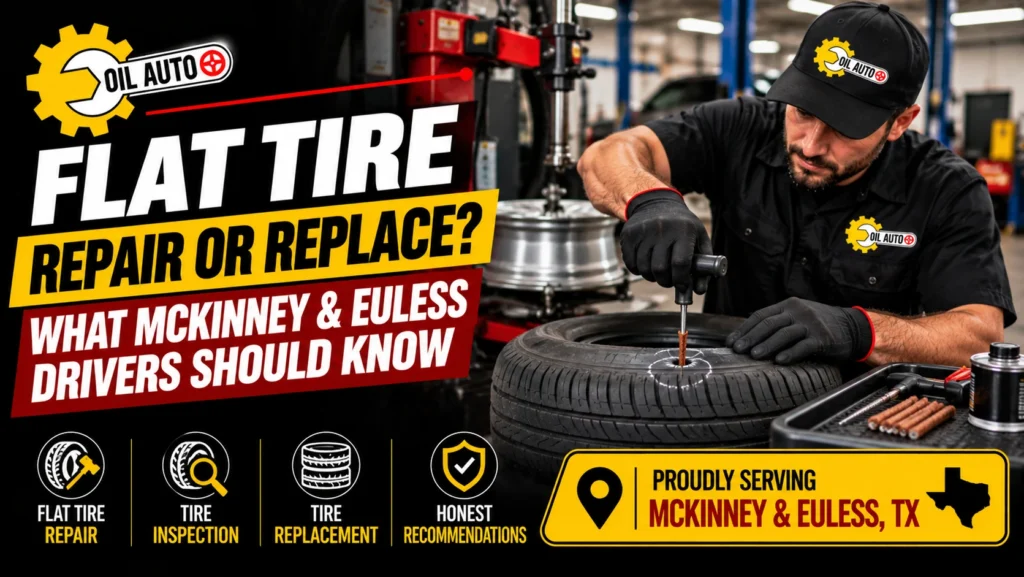
Can Your Flat Tire Be Repaired, or Does It Need Replacement?
A flat tire can happen when you least expect it. You might notice your tire pressure warning light during your morning commute, hear a sudden hissing sound, or discover a nail lodged in your tire after parking. Whatever the situation, one question usually comes first: Can the tire be repaired, or do you need a completely new one?
The good news is that not every flat tire requires replacement. Small punctures in the right location can often be repaired safely, potentially saving you money while extending the tire’s useful life. However, damage to the sidewall, shoulder, or internal structure may make replacement the only safe option.
Understanding when to choose flat tire repair versus tire replacement can help you make a better decision and avoid unnecessary expenses. For drivers in McKinney and Euless, here is what to know before visiting a tire repair shop.
When Can a Flat Tire Be Repaired?
A flat tire may be repairable when the damage is small, limited to the appropriate tread area, and has not compromised the tire’s internal structure.
According to the U.S. Tire Manufacturers Association (USTMA), passenger and light-truck tire punctures should generally be no larger than 1/4 inch (6 mm) in diameter and must remain within the designated repairable tread area.
Here are some situations where tire puncture repair may be possible.
1. A Small Nail or Screw in the Center of the Tread
One of the most common causes of a flat tire is a nail or screw becoming embedded in the tread. When the puncture is small and located within the repairable center tread area, a professional repair may restore the tire’s ability to hold air.
However, removing the object without inspecting the tire is not enough. The technician needs to check whether the puncture caused additional internal damage.
2. Limited Damage With No Internal Structural Problems
A tire that has lost air because of a small puncture may still be structurally sound. If inspection reveals no internal damage, excessive wear, or previous improper repairs, the technician may determine that a repair is appropriate.
The tire must be removed from the wheel to inspect its interior properly. A puncture that appears minor from the outside can sometimes cause hidden damage inside.
3. A Tire With Sufficient Remaining Tread
Even when the puncture is repairable, the tire must have sufficient usable tread. A severely worn tire may no longer provide adequate traction or meet applicable safety requirements.
If the tread has reached the manufacturer’s wear indicators or the legal minimum tread depth, replacement is generally the appropriate option rather than repairing the puncture.
When Does a Tire Need Replacement?
Some tire damage cannot be repaired safely. In these situations, installing a replacement tire is the better decision.
1. Damage to the Sidewall
The sidewall is the flexible section between the tread and the wheel. It supports the vehicle’s load and flexes as the tire rotates.
Unlike certain tread punctures, sidewall damage generally cannot be repaired safely because the area experiences significant flexing during driving.
Bulges, deep cuts, cracks, and punctures in the sidewall are warning signs that the tire may need replacement.
2. Punctures Near the Tire Shoulder
The shoulder is the area where the tread transitions into the sidewall. Damage extending into this region falls outside the standard repairable puncture area.
Even a relatively small nail can make a tire unsafe if it enters close to the shoulder. A professional inspection is necessary to determine whether the injury can be repaired under applicable tire-manufacturer guidelines.
3. Large or Multiple Punctures
Punctures larger than 1/4 inch (6 mm) generally exceed the standard USTMA repair limit for passenger and light-truck tires.
Multiple punctures may also make a tire unsuitable for repair, particularly when the damaged areas overlap or are positioned too close together.
Attempting to repair extensive damage can compromise the tire’s ability to maintain pressure and handle road conditions safely.
4. Driving on a Completely Flat Tire
Driving on a tire with very low or no air pressure can damage its internal structure. Even if the original puncture was small, driving on the flat tire may cause additional damage that cannot be seen externally.
This is why it is important to stop safely when you notice a flat tire rather than continuing to drive to the nearest repair shop.
5. Severe Wear, Cracks, or Structural Damage
Sometimes a puncture is not the only problem. Tires exposed to prolonged heat, improper inflation, and extended use can develop cracks, uneven tread wear, or internal deterioration.
If a tire is worn beyond acceptable limits or has significant structural damage, replacing it is generally safer than attempting a repair.
How Does Professional Tire Puncture Repair Work?
A proper tire repair involves more than inserting a rubber plug into a hole. The technician needs to inspect the complete tire and determine whether the damage meets established repair standards.
A professional tire repair shop generally follows these steps:
Step 1: Identify the damage. The technician locates the puncture and checks the tread, shoulder, and sidewall for visible damage.
Step 2: Remove the tire from the wheel. The tire is dismounted so the interior can be inspected for hidden damage, especially damage caused by driving while underinflated.
Step 3: Evaluate repair eligibility. The technician checks puncture size, location, tread condition, and previous repairs to determine whether the tire is suitable for repair.
Step 4: Apply an approved repair method. A proper puncture repair generally uses a combination repair unit that fills the puncture channel with a rubber stem and seals the inner liner with a patch.
Step 5: Reinstall and inspect. Once the repair is complete, the tire is reinstalled, inflated to the manufacturer’s recommended pressure, and checked for air leaks.
A plug alone or a patch alone is not considered a complete repair under USTMA procedures.
Professional inspection matters because an incorrectly repaired tire may lose pressure or fail while driving.
How Much Does Tire Repair Cost?
One common question drivers ask is, how much tire repair will cost. The final price depends on the type of damage, whether the tire qualifies for repair, and the service required.
A straightforward, repairable tread puncture generally costs less than replacing an entire tire. However, the cost can increase if additional work is needed, such as addressing a damaged valve stem, inspecting the tire pressure monitoring system (TPMS), or replacing an unsuitable tire.
Before approving the service, ask the technician to explain whether repair or replacement is recommended and what is included in the estimate.
If the tire cannot be repaired, replacement costs will depend on the tire’s size, brand, performance rating, and vehicle requirements.
Choosing the cheapest option is not always the best decision. The tire must match the vehicle’s specifications and provide suitable traction, load capacity, and speed rating.
Where to Get Tire Repair in McKinney and Euless
When you are searching for a tire repair shop near me, choosing a facility that inspects the tire before recommending a repair or replacement is important.
Oil Auto Plus provides professional tire services in McKinney and Euless, TX, including flat tire repair, tire replacement, tire pressure inspections, tread depth inspections, valve stem inspections, tire rotation, and new and used tires.
Whether you have a small puncture or a tire that needs replacement, the team can inspect its condition and help determine the appropriate service.
Drivers can explore the dedicated tire service and repair options or review the company’s other automotive maintenance and repair services.
Regular tire maintenance is also important in North Texas, where hot pavement, highway driving, and daily traffic can contribute to tire wear. Proper tire pressure and routine inspections help support vehicle handling, braking performance, and tire life.
To find the nearest facility, visit the Oil Auto Plus locations page. The company serves drivers at:
- McKinney: 1003 W University Dr, McKinney, TX 75069 | 972-542-8626
- Euless: 2740 W Euless Blvd, Euless, TX 76040 | 817-571-8100
Both locations are open Monday through Friday, 8 AM to 6 PM, and Saturday, 8 AM to 5 PM.
You can learn more about the company’s approach to vehicle maintenance on the About Oil Auto Plus page.
If your vehicle needs additional attention, review the available financing options and current service specials when planning your repair budget.
For more vehicle maintenance advice, visit the Oil Auto Plus blog. When you are ready to discuss a flat tire or replacement, use the contact page to reach the appropriate location.
FAQs
1. Can every flat tire be repaired?
No. A flat tire can generally be repaired only when the damage is within the approved tread repair area, the puncture is small enough, and the tire has no significant internal damage. Sidewall punctures, shoulder damage, and severe structural problems generally require replacement.
2. How do I know if my tire needs repair or replacement?
A small nail or screw in the center tread may be repairable after professional inspection. However, sidewall bulges, deep cuts, large punctures, severe wear, and damage caused by driving on a flat tire may require replacement. A technician should inspect the tire before making a recommendation.
3. How much does flat tire repair cost?
The cost depends on puncture size, location, tire condition, and the repair method required. A standard repairable puncture is generally less expensive than buying a replacement tire. Ask your tire repair shop for an estimate after the tire has been inspected.
4. Is a tire plug enough to repair a puncture?
No. A plug alone is not considered a complete repair under USTMA recommendations. The tire should be removed from the wheel, inspected internally, and repaired using an appropriate combination method that fills the puncture and seals the inner liner.
5. Can I drive with a nail in my tire?
Driving with a nail in your tire is not recommended because the tire may lose pressure and suffer additional internal damage. Avoid removing the nail yourself. Check the tire pressure and arrange professional assistance. If the tire is losing air rapidly or appears flat, do not continue driving on it.
6. Where can I find tire repair in McKinney or Euless, TX?
Oil Auto Plus provides tire repair and replacement services at its McKinney and Euless locations. The team offers flat tire repair, tire inspections, tire rotations, and replacement options. Contact the nearest location to discuss your tire’s condition and current service availability.