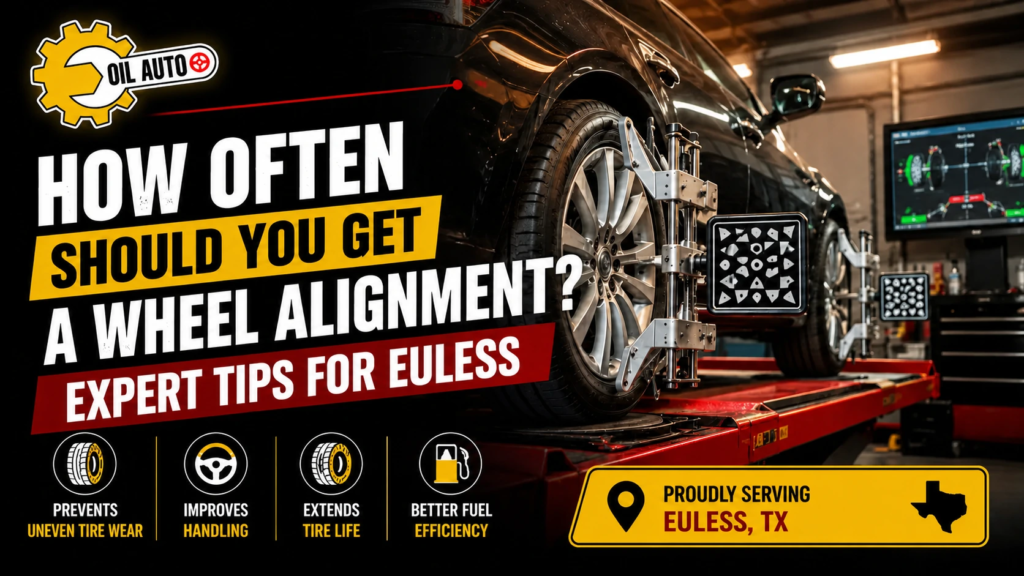
Most drivers remember to change their oil, rotate their tires, and replace worn brake pads, but wheel alignment is often overlooked until a noticeable problem develops. Unfortunately, waiting too long can lead to uneven tire wear, reduced fuel efficiency, poor handling, and unnecessary strain on your suspension system.
A properly aligned vehicle doesn’t just drive better it also helps protect your investment by extending tire life and improving overall driving safety. Whether you commute daily through Euless, or frequently drive on Texas highways, regular alignment checks are an important part of routine vehicle maintenance.
Many drivers ask, how often should you get a wheel alignment? The answer depends on your driving habits, road conditions, and whether your vehicle has recently experienced events that may have affected its suspension or steering components.
In this guide, we’ll explain how wheel alignments work, when they’re recommended, common warning signs, and how staying proactive can help you avoid costly repairs in the future.
What Is a Wheel Alignment?
A wheel alignment is a precision adjustment of your vehicle’s suspension angles rather than the tires themselves. During the service, a technician adjusts the angles at which the wheels contact the road to meet the manufacturer’s specifications.
Proper alignment helps ensure that all four wheels point in the correct direction, allowing the vehicle to drive straight while promoting even tire wear.
Modern computerized alignment equipment measures several suspension angles, including camber, caster, and toe. Even slight deviations from factory specifications can affect vehicle performance over time.
Professional Wheel Alignment Services help restore these angles, improving handling while protecting both your tires and suspension components.
Why Wheel Alignment Matters
Many drivers assume alignment only affects steering, but its impact extends much further.
When your wheels are correctly aligned, your tires maintain even contact with the road surface. This improves stability, steering response, braking performance, and tire longevity.
Misalignment, on the other hand, forces tires to scrub against the pavement rather than roll smoothly. This increases rolling resistance, causes premature tire wear, and may even reduce fuel economy.
Maintaining proper alignment also reduces unnecessary stress on suspension components, helping avoid more expensive repairs down the road.
Regular inspections performed during Routine Maintenance appointments often identify alignment issues before they become major problems.
So, How Often Should You Get a Wheel Alignment?
There isn’t a universal schedule that applies to every vehicle, but most automotive professionals recommend checking your alignment approximately every 12 months or every 10,000 to 12,000 miles under normal driving conditions.
However, the ideal wheel alignment interval recommendation depends on several factors, including:
- Road conditions
- Driving habits
- Vehicle type
- Suspension design
- Tire condition
Drivers who frequently encounter potholes, uneven roads, construction zones, gravel roads, or curbs may need alignment inspections more often.
Even if your vehicle seems to drive normally, small alignment changes can gradually wear your tires long before steering problems become obvious.
Scheduling periodic inspections alongside your regular Oil Change service makes it easier to stay ahead of potential problems.
Common Signs Your Vehicle Needs an Alignment
Your vehicle often provides warning signs before alignment issues become severe.
Ignoring these symptoms may shorten tire life and affect overall driving safety.
Some of the most common indicators include:
- Your vehicle pulls to one side while driving.
- The steering wheel is off-center when driving straight.
- Uneven or rapid tire wear.
- Steering feels loose or unstable.
- Tires squeal while turning.
- Reduced fuel efficiency.
- Vibrations felt through the steering wheel.
These symptoms don’t always indicate an alignment problem alone, but they should always be inspected by a qualified technician.
If unusual tire wear is present, combining a professional alignment with Tire Service helps maximize tire life while restoring safe handling.
Events That Can Knock Your Alignment Out of Specification
Many drivers are surprised by how easily alignment can change.
Some of the most common causes include:
| Driving Situation | Potential Effect on Alignment |
| Hitting a pothole | Suspension angles may shift |
| Striking a curb | Steering components can move out of specification |
| Driving on rough roads | Gradual suspension wear |
| Minor collisions | Alignment and suspension damage |
| Worn suspension parts | Progressive alignment changes |
| Installing new suspension components | Alignment must be reset |
Even a single impact may affect your vehicle enough to justify an inspection.
Texas roads experience heavy traffic, ongoing construction, and seasonal weather changes that can contribute to alignment issues over time.
Should You Get an Alignment After Installing New Tires?
Absolutely.
One of the most common questions technicians receive is when to get alignment after new tires.
Installing new tires without checking alignment can cause those new tires to begin wearing unevenly almost immediately if the alignment is already out of specification.
Since tires represent a significant investment, performing an alignment at the same time helps ensure they wear evenly and achieve their expected lifespan.
Many drivers choose to combine new tire installation with professional alignment because it protects both their investment and vehicle performance from day one.
Does Wheel Alignment Improve Fuel Economy?
Many people don’t associate wheel alignment with fuel efficiency, but proper alignment can reduce unnecessary rolling resistance.
When wheels are aligned correctly, your engine doesn’t have to work as hard to keep the vehicle moving in a straight line.
Although alignment alone won’t dramatically change fuel consumption, correcting significant misalignment may contribute to improved efficiency while reducing tire wear.
Proper tire pressure, routine maintenance, clean air filters, and scheduled inspections all work together to maximize fuel economy.
Comprehensive automotive maintenance services help ensure every system contributes to optimal vehicle performance.
Alignment Problems Can Affect More Than Your Tires
Alignment issues don’t only shorten tire life.
Over time, poor alignment can place additional stress on suspension parts, steering components, wheel bearings, and even braking performance.
Vehicles with alignment problems may require steering corrections more frequently, making long highway drives more tiring and reducing overall driving comfort.
Because alignment issues often develop gradually, many drivers simply adapt to the changes without realizing how much their vehicle’s handling has deteriorated.
Routine inspections can identify these problems early before additional repairs become necessary.
Ready for service you can count on?
Our certified technicians are ready to help with everything from fast oil changes to complete auto repair.
How Long Does a Wheel Alignment Take?
Another question drivers frequently ask is, how long does a wheel alignment take?
For most passenger vehicles, a standard computerized wheel alignment typically takes between 30 minutes and one hour, depending on the condition of the suspension and steering components. If technicians discover worn tie rods, ball joints, control arms, or other damaged parts, additional repairs may be necessary before the alignment can be completed successfully.
The exact timeframe also depends on whether your vehicle requires a front-end alignment or a four-wheel alignment. Modern vehicles with independent rear suspension generally benefit from four-wheel alignment because all four wheels influence handling and tire wear.
While it may seem like a relatively quick service, the precision involved makes it one of the most valuable maintenance procedures for protecting your vehicle’s performance and extending the life of your tires.
Understanding Wheel Alignment Cost in Texas
When researching wheel alignment cost Texas, it’s important to remember that pricing can vary depending on several factors rather than relying on a single statewide average.
Some of the factors that influence the cost include:
- The type of vehicle you drive.
- Whether your vehicle requires a two-wheel or four-wheel alignment.
- The condition of suspension and steering components.
- Whether additional repairs are needed before alignment.
- The technology and equipment used by the repair facility.
Instead of choosing a service based solely on price, consider the value of experienced technicians, modern alignment equipment, and a thorough inspection. An accurate alignment performed correctly the first time can help prevent premature tire replacement and reduce the likelihood of additional suspension repairs, making it a worthwhile investment.
If you’re unsure whether your vehicle needs an alignment, scheduling an inspection with a trusted automotive service center can help determine the best course of action before unnecessary tire wear occurs.
Wheel Alignment vs. Tire Balancing
Wheel alignment and tire balancing are often confused because both improve ride quality, but they address different issues.
Wheel alignment adjusts the angles of your suspension so your tires make proper contact with the road. Tire balancing, on the other hand, ensures that the weight of each tire and wheel assembly is evenly distributed.
Here’s a quick comparison:
| Wheel Alignment | Tire Balancing |
| Corrects suspension angles | Corrects uneven weight distribution |
| Helps prevent uneven tire wear | Reduces vibrations while driving |
| Improves steering and handling | Creates a smoother ride |
| Recommended after suspension impacts or new tires | Recommended when installing or rotating tires |
Many vehicles benefit from both services at different times. During a routine inspection, your technician can recommend which service is appropriate based on your vehicle’s condition and the symptoms you’re experiencing.
Why Routine Alignment Checks Save Money
It’s easy to postpone an alignment when your vehicle still feels drivable, but waiting too long often leads to more expensive repairs.
Misaligned wheels can wear down a new set of tires thousands of miles earlier than expected. They may also place unnecessary stress on suspension and steering components, increasing repair costs over time.
Routine alignment inspections help identify small problems before they become larger mechanical issues. In many cases, correcting a minor alignment concern today can prevent the need for premature tire replacement tomorrow.
This proactive approach also supports better fuel efficiency and a smoother, more comfortable driving experience.
When alignment checks are included as part of your regular maintenance schedule, protecting your vehicle becomes much easier and more affordable in the long run.
Should You Combine Alignment with Other Maintenance Services?
Absolutely. A wheel alignment is often most effective when performed alongside other routine maintenance services.
For example, many drivers schedule an alignment when they purchase new tires, rotate existing tires, or complete a seasonal maintenance visit. This allows technicians to evaluate the overall condition of the suspension, steering, brakes, and tires during a single appointment.
Depending on your vehicle’s needs, your technician may also recommend related services such as Brake Service, a State Inspection, or an Engine Diagnostic if other warning signs are present.
Combining services can save time while helping ensure your vehicle is operating safely and efficiently.
Choosing a Trusted Alignment Shop in Euless
If you’re searching for front end alignment or tire alignment Euless TX, selecting the right service provider is just as important as scheduling the alignment itself.
Look for an automotive shop that invests in modern computerized alignment equipment and employs experienced technicians who inspect your suspension and steering system before making adjustments.
A reputable shop should also explain any findings clearly, discuss whether additional repairs are needed, and answer your questions without recommending unnecessary services.
At Oil Auto Plus, our team focuses on honest recommendations, quality workmanship, and preventive maintenance that helps drivers protect their vehicles for the long term. Whether you need a routine alignment, tire service, or a more comprehensive inspection, our goal is to provide dependable automotive care tailored to your vehicle’s needs.
You can find the nearest service center by visiting our Locations page or learn more about our commitment to customer service on our About Us page.
Keep Your Vehicle Driving Straight and Your Tires Lasting Longer
Knowing how often should you get a wheel alignment is an important part of maintaining your vehicle’s safety, comfort, and long-term reliability. While many experts recommend checking your alignment every 10,000 to 12,000 miles or at least once a year, your actual needs depend on your driving habits, road conditions, and any impacts your vehicle experiences.
By paying attention to warning signs such as uneven tire wear, steering pull, or an off-center steering wheel, you can address alignment issues before they lead to costly repairs. Pairing regular alignment inspections with tire rotations, oil changes, and routine maintenance helps ensure your vehicle continues to perform at its best.
If it’s been a while since your last alignment or you’ve recently hit a pothole, installed new tires, or noticed changes in the way your vehicle handles the experienced team at Oil Auto Plus is here to help. We provide professional wheel alignment services for drivers throughout Euless and the surrounding Texas communities.
Ready to protect your tires and improve your vehicle’s performance? Contact us today to schedule your next alignment or preventive maintenance appointment.
FAQs
1. How often should you get a wheel alignment?
Most vehicles should have their alignment checked approximately every 10,000 to 12,000 miles or at least once a year. However, if you frequently drive on rough roads, hit potholes, or notice steering issues, you may need an alignment sooner.
2. What are the signs that my vehicle needs a wheel alignment?
Common signs include the vehicle pulling to one side, an off-center steering wheel, uneven tire wear, steering wheel vibration, squealing tires during turns, or reduced handling performance. These symptoms should be inspected by a qualified technician as soon as possible.
3. How long does a wheel alignment take?
A standard computerized wheel alignment usually takes between 30 minutes and one hour. If damaged suspension or steering components are discovered during the inspection, additional repair time may be required before the alignment can be completed.
4. Should I get a wheel alignment after installing new tires?
Yes. Performing an alignment after installing new tires helps ensure they wear evenly from the beginning and protects your investment by reducing the risk of premature tire wear.
5. What is the difference between wheel alignment and tire balancing?
Wheel alignment adjusts your suspension angles so the wheels point correctly, while tire balancing evenly distributes the weight of the tire and wheel assembly to reduce vibrations. Both services improve vehicle performance but address different issues.
6. Can poor wheel alignment affect fuel economy?
Yes. Misaligned wheels create additional rolling resistance, forcing the engine to work harder. While the effect varies, correcting significant alignment issues may improve fuel efficiency while extending tire life.
7. How much does a wheel alignment cost in Texas?
The cost depends on factors such as your vehicle type, whether it requires a two-wheel or four-wheel alignment, and whether suspension repairs are needed. Contact your local service center for an accurate estimate based on your vehicle.
8. Why choose Oil Auto Plus for wheel alignment services?
At Oil Auto Plus, we combine experienced technicians, advanced alignment equipment, and honest recommendations to help drivers maintain safe, reliable vehicles. In addition to wheel alignment, we offer a full range of automotive services to keep your vehicle performing its best. Visit our blog for more maintenance tips and expert automotive advice.
Ready for service you can count on?
Our certified technicians are ready to help with everything from fast oil changes to complete auto repair.