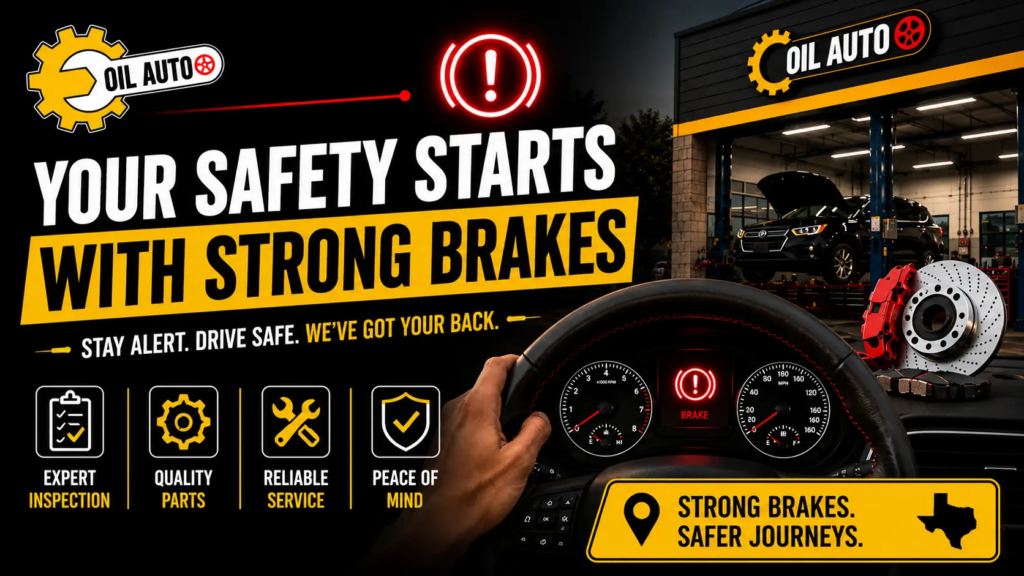
Driving with worn brakes is one of the most dangerous risks on the road. While engines, transmissions, and suspension components often receive the most attention, your braking system is the single most important safety feature on your vehicle. Ignoring small warning signs today can quickly turn into expensive repairs or worse, a serious accident.
Many drivers don’t realize that brakes rarely fail without giving early warning signals. Your vehicle usually provides several clues that something isn’t right. Recognizing these signs your brakes need to be replaced allows you to schedule service before minor wear becomes a costly repair.
Whether you commute daily around McKinney, travel throughout North Texas, or frequently drive on highways, understanding these warning signs can help keep you, your passengers, and everyone else on the road safe.
Ready for service you can count on?
Our certified technicians are ready to help with everything from fast oil changes to complete auto repair.
Why Brake Maintenance Matters
Your braking system includes several components working together:
- Brake pads
- Brake rotors
- Brake calipers
- Brake fluid
- Brake lines
- Master cylinder
Over thousands of miles, every one of these parts experiences wear. Brake pads naturally become thinner, rotors develop grooves, brake fluid absorbs moisture, and hydraulic components age over time.
Routine maintenance helps:
- Improve stopping distance
- Prevent expensive rotor replacement
- Protect other brake components
- Improve vehicle safety
- Reduce repair costs
- Maintain vehicle value
Many manufacturers recommend a complete brake inspection at every oil change or tire rotation.
1. Squeaking or Squealing Brakes
One of the earliest brake warning signs to watch for is a high-pitched squealing sound whenever you press the brake pedal.
If you’ve been wondering about the squeaking brakes cause, several possibilities exist:
- Brake pads are reaching their wear limit.
- Moisture has accumulated overnight.
- Dust or debris is trapped between the rotor and pad.
- Low-quality brake pads are creating excess noise.
Most brake pads include a built-in wear indicator a small metal tab designed to create a squealing sound once the friction material becomes too thin.
If the noise continues for several days, it’s time to schedule a professional inspection rather than hoping it disappears on its own.
2. Grinding Noise When Braking
Grinding is much more serious than squealing.
This usually indicates that the brake pad material has completely worn away, allowing the metal backing plate to contact the rotor.
Consequences include:
- Severely damaged brake rotors
- Reduced stopping ability
- Higher repair costs
- Increased braking distance
- Unsafe driving conditions
Instead of replacing only brake pads, you may now need:
- New brake pads
- Rotor resurfacing or replacement
- Caliper inspection
- Additional brake hardware
Ignoring grinding noises almost always leads to significantly higher repair bills.
3. Brake Pedal Feels Soft or Spongy
Your brake pedal should feel firm and responsive.
If it suddenly feels soft, sinks toward the floor, or requires pumping before the vehicle slows down, the hydraulic braking system may have a problem.
Possible causes include:
- Air inside brake lines
- Brake fluid leak
- Moisture-contaminated brake fluid
- Worn master cylinder
- Internal hydraulic failure
This symptom should never be ignored because braking performance can deteriorate rapidly.
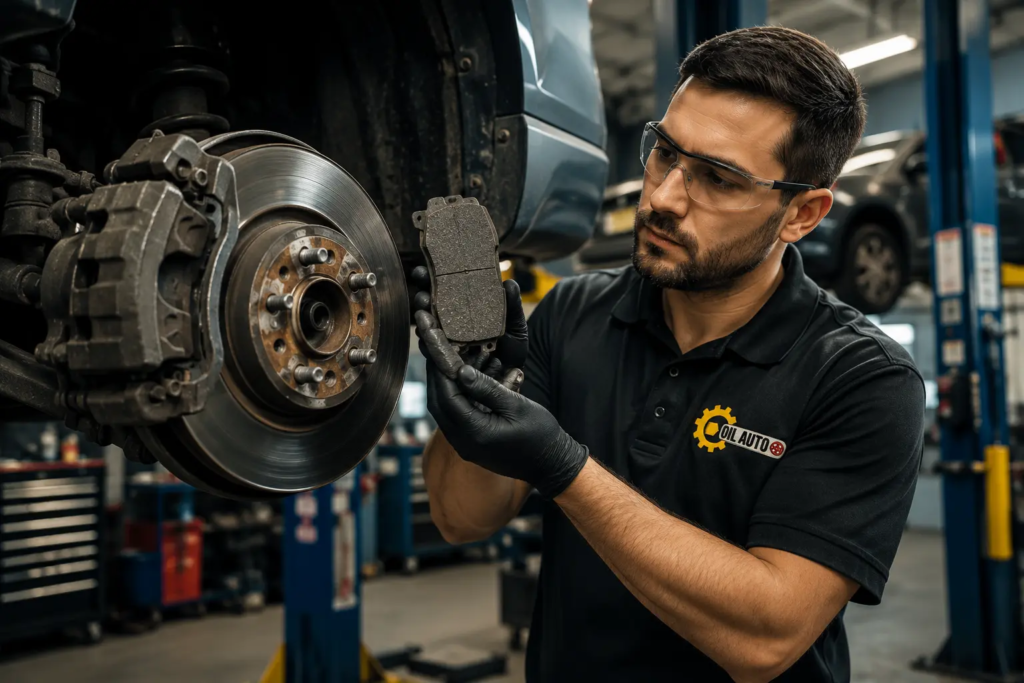
4. Steering Wheel Vibrates During Braking
Does your steering wheel shake whenever you slow down?
This usually indicates warped brake rotors.
Excessive heat generated during repeated hard braking causes rotors to develop uneven surfaces. As the brake pads clamp onto the rotor, you feel vibration through the steering wheel and brake pedal.
Additional symptoms include:
- Pulsating brake pedal
- Vehicle shaking while stopping
- Uneven braking
- Reduced braking efficiency
A professional inspection will determine whether the rotors can be resurfaced or require replacement.
5. Brake Warning Light Appears
Modern vehicles constantly monitor braking performance.
If your dashboard brake warning light appears, your vehicle is telling you that something requires attention.
Common causes include:
- Low brake fluid
- Worn brake pads
- ABS system issue
- Parking brake malfunction
- Hydraulic system fault
While some warning lights indicate minor issues, others point to serious safety concerns. A diagnostic inspection can quickly identify the source before it worsens.
6. Car Pulls to One Side While Braking
A properly functioning brake system applies equal braking force to every wheel.
If your vehicle consistently pulls left or right while braking, possible causes include:
- Sticking brake caliper
- Uneven brake pad wear
- Contaminated brake pads
- Damaged brake hose
- Suspension issues
Besides reducing control, uneven braking causes premature tire wear and additional stress on steering components.
Professional diagnosis ensures the correct component is repaired rather than replacing unnecessary parts.
7. Increased Stopping Distance
One of the clearest signs your brakes need to be replaced is taking longer to stop than usual.
You may notice:
- Pressing the pedal harder
- Slower response
- Longer stopping distance
- Less confidence during emergency braking
This symptom often develops gradually, making it difficult for drivers to notice until braking performance has significantly declined.
If your vehicle doesn’t stop as quickly as it once did, schedule an inspection immediately.
When to Replace Brake Pads
A common question drivers ask is when to replace brake pads.
There isn’t a universal mileage because brake life depends on:
- Driving habits
- Traffic conditions
- Vehicle weight
- Brake pad material
- Highway vs. city driving
- Towing frequency
Generally:
| Brake Pad Type | Average Lifespan |
|---|---|
| Organic | 20,000–40,000 miles |
| Semi-Metallic | 30,000–60,000 miles |
| Ceramic | 50,000–70,000 miles |
However, mileage should never replace an actual inspection. Brake pads may wear faster if you frequently drive in stop-and-go traffic around McKinney or carry heavy loads.
How Long Do Brake Pads Last?
Many drivers also ask, how long do brake pads last?
Most vehicles require brake pad replacement somewhere between 30,000 and 70,000 miles, but several factors influence longevity.
Brake pads wear faster if you:
- Frequently drive in heavy traffic
- Brake aggressively
- Tow trailers
- Drive on steep hills
- Carry heavy cargo
Good driving habits, regular inspections, and quality replacement parts can significantly extend brake life.
What Happens If You Ignore Brake Problems?
Ignoring brake issues often leads to much more expensive repairs.
Small problems can become:
- Damaged rotors
- Seized calipers
- Brake fluid leaks
- ABS damage
- Wheel bearing wear
- Complete brake failure
Replacing brake pads early is considerably less expensive than replacing an entire braking system.
Why Routine Brake Inspections Are Worth It
Scheduling a routine brake inspection McKinney TX helps identify problems before they become dangerous.
A professional brake inspection typically includes:
- Brake pad thickness measurement
- Rotor condition evaluation
- Brake fluid inspection
- Caliper operation check
- Brake line inspection
- ABS system scan
- Road test
Preventative maintenance not only improves safety but can also reduce long-term repair costs.
Tips to Extend Brake Life
You can increase brake lifespan by adopting better driving habits.
Some practical tips include:
- Avoid hard braking whenever possible.
- Maintain a safe following distance.
- Remove unnecessary weight from your vehicle.
- Have brake fluid replaced at recommended intervals.
- Rotate tires regularly.
- Schedule inspections before long road trips.
- Address unusual noises immediately.
These simple habits can help your brakes last longer while improving overall vehicle safety.
Final Thoughts
Your vehicle almost always provides warning signs before brake failure occurs. Paying attention to unusual noises, vibrations, dashboard warning lights, or reduced stopping performance allows you to address issues before they become expensive or dangerous.
Understanding the signs your brakes need to be replaced is one of the easiest ways to protect yourself and your passengers. Whether you’re noticing squealing sounds, wondering when to replace brake pads, trying to determine the squeaking brakes cause, or simply asking how long do brake pads last, regular inspections remain the best way to ensure reliable braking performance.
If you experience any of these warning signs, don’t wait. A professional brake inspection McKinney TX can identify worn components early and help keep your vehicle performing safely on every drive.
FAQs
1. What are the most common signs your brakes need to be replaced?
Some of the most common signs your brakes need to be replaced include squeaking or grinding noises, a soft brake pedal, vibrations while braking, a brake warning light, pulling to one side, and longer stopping distances. If you notice any of these symptoms, schedule a brake inspection as soon as possible.
2. How long do brake pads last?
Many drivers ask, how long do brake pads last? On average, brake pads last between 30,000 and 70,000 miles, depending on your driving habits, road conditions, vehicle type, and the quality of the brake pads. Frequent city driving and aggressive braking typically shorten their lifespan.
3. What causes squeaking brakes?
The most common squeaking brakes cause is worn brake pads with built-in wear indicators. However, squeaking can also occur due to moisture, dust buildup, glazed brake pads, or low-quality brake components. A professional inspection can determine the exact cause.
4. When should I replace my brake pads?
If you’re wondering when to replace brake pads, it’s best to replace them when the friction material becomes too thin, typically around 3–4 mm or whenever your technician recommends replacement during a brake inspection. Waiting too long can damage the brake rotors and increase repair costs.
5. Can I drive with worn brake pads?
Driving with worn brake pads is not recommended. Reduced braking performance increases stopping distance and can damage rotors, calipers, and other braking components. If your brakes are making unusual noises or your vehicle doesn’t stop normally, have them inspected immediately.
6. How often should I schedule a brake inspection?
Most automotive professionals recommend a brake inspection every 12 months or approximately every 12,000 miles. If you drive frequently in heavy traffic around McKinney or notice unusual brake behavior, inspections should be performed sooner.
7. Why is a brake inspection important?
A professional brake inspection McKinney TX helps identify worn brake pads, damaged rotors, leaking brake fluid, sticking calipers, and other safety concerns before they become expensive repairs. Preventive inspections improve braking performance and help keep you safe on the road.
8. Is it better to replace brake pads and rotors together?
Not always. If the rotors are still within the manufacturer’s specifications and have minimal wear, only the brake pads may need replacement. However, severely worn, warped, or grooved rotors should be resurfaced or replaced along with new brake pads for optimal braking performance.
Ready for service you can count on?
Our certified technicians are ready to help with everything from fast oil changes to complete auto repair.